
Agri knowledge
Leaf Blight (Rhizoctonia Leaf Fall) - A Deadly Threat in the Rainy Season
2021-01-21 · 3 min
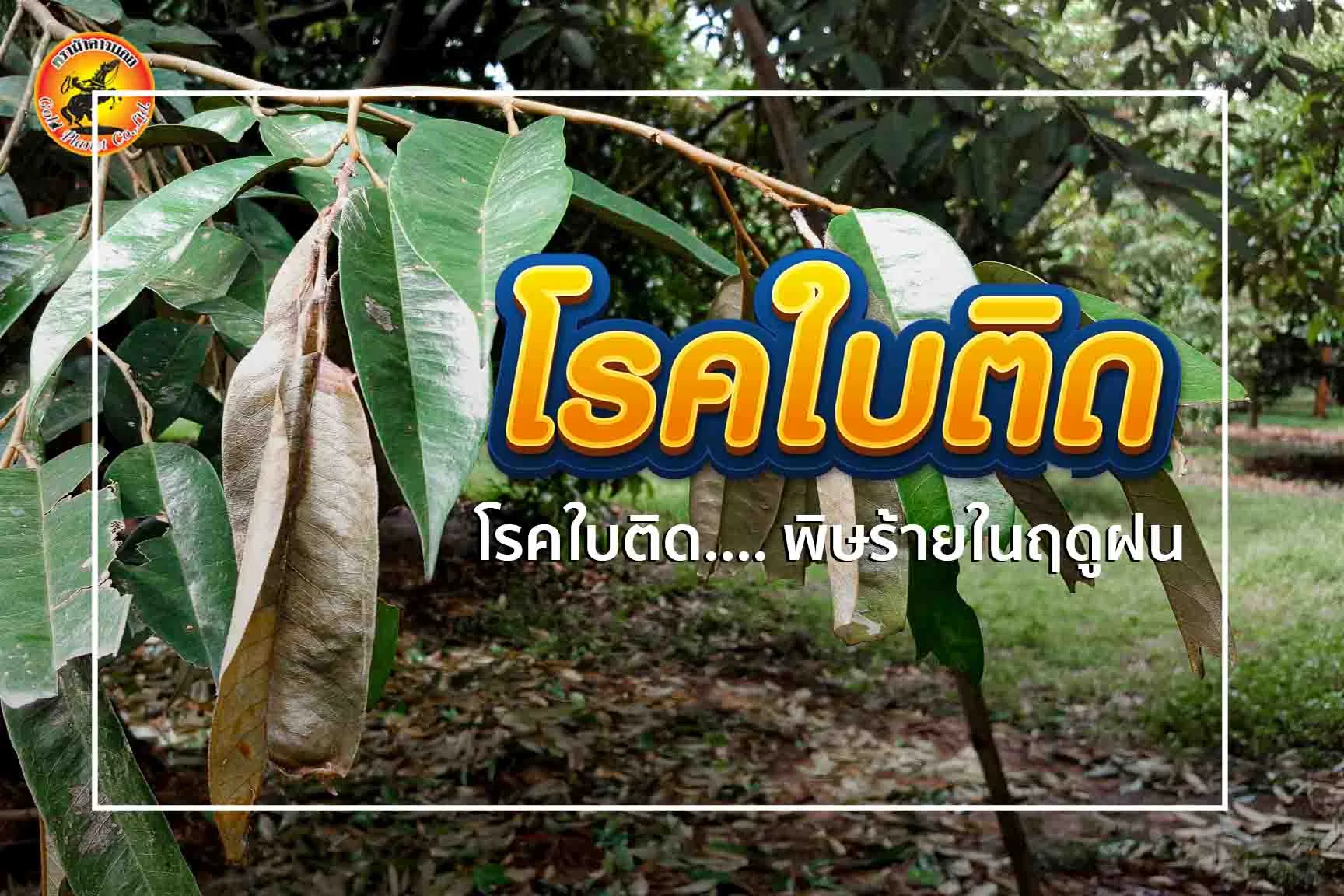
Leaf Blight.... A Deadly Threat in the Rainy Season. Leaf blight is a condition in which durian leaves stick together, bound by fungal threads, with the leaf surface showing symptoms resembling a scald from hot water. This disease tends to spread during the rainy season when humidity is high, and especially in durian trees with dense canopies. Leaf blight is caused by the fungus Rhizoctonia solani, and the disease can spread from tree to tree via wind. This can be observed when a tree upwind of an air current is infected — trees downwind of that same air current often show the same leaf-blight symptoms as well. Leaf blight causes durian trees to shed their leaves, leaving only bare branches. This deprives the durian tree of the chlorophyll-bearing leaf area it needs to photosynthesize, produce food, and store reserves for itself, causing the tree to stop growing and potentially die.
Prevention and Treatment
Prevention can be achieved by pruning branches within the canopy so it is not too dense, allowing sunlight to penetrate into the canopy and reduce humidity inside it. If leaf blight symptoms have already appeared, it is recommended to use Ti Plus or Thermosa at a ratio of 200 cc per 200 litres of water, spraying in alternation with Cycarsol at a rate of 100 grams per 200 litres of water. Spray thoroughly over the entire canopy, including the durian trees surrounding the affected tree where leaf blight is present.
The durian is a type of fruit tree that requires understanding and adaptive care in line with the changing weather conditions each year. As a durian-growing sage once said, "Durian...